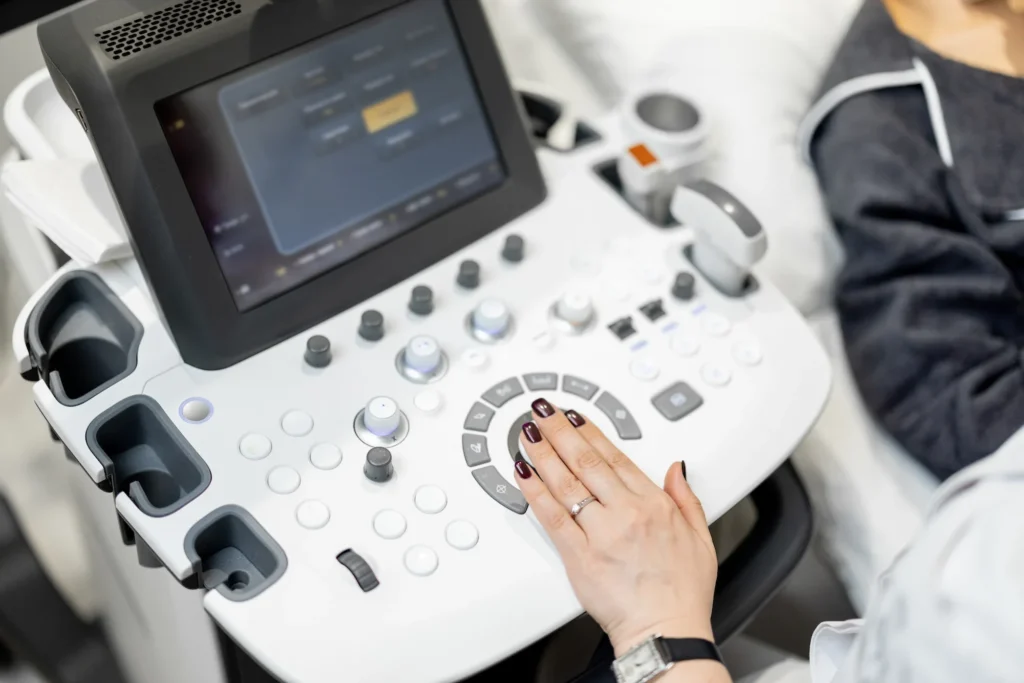
Pelvic Ultrasound for Women’s Health Physiotherapy
Service
Wondering What’s Really Going on With Your Pelvic Floor?
Whether you’re experiencing bladder or bowel symptoms, pelvic pain, preparing for birth, recovering after having a baby, or simply wanting to better understand your pelvic floor, a pelvic ultrasound can give you a clearer picture of how your muscles are working.
Service
What is a Pelvic Ultrasound?
Pelvic ultrasound is a simple, non-invasive assessment we use as part of women’s health physiotherapy.
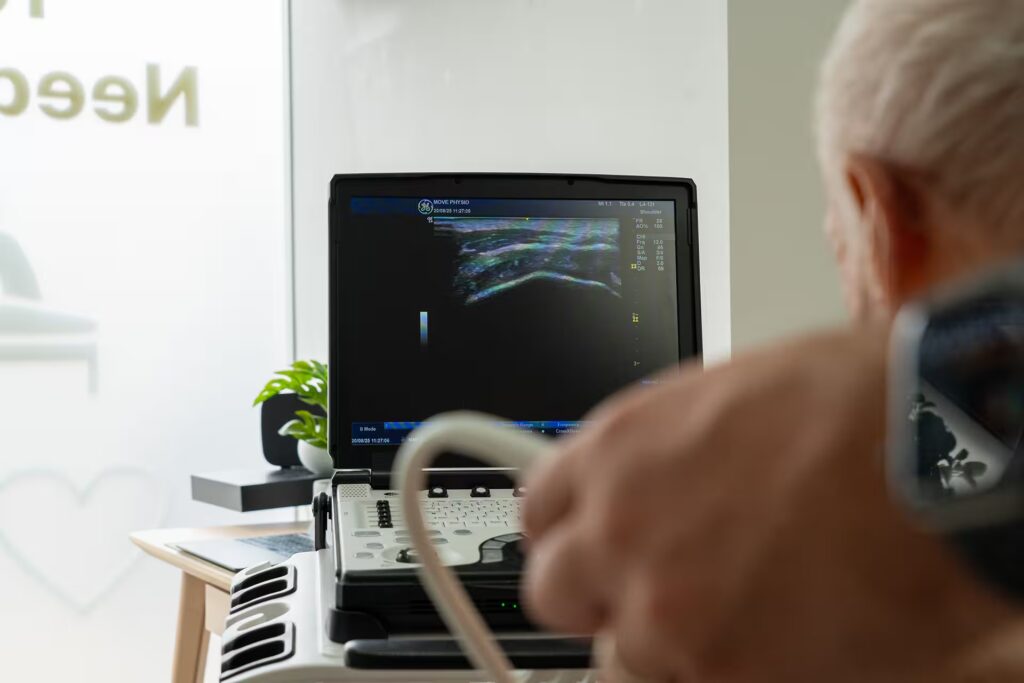
Using real-time ultrasound imaging, we can assess how your pelvic floor muscles move and function when you contract, relax, cough, bear down and perform other movements.
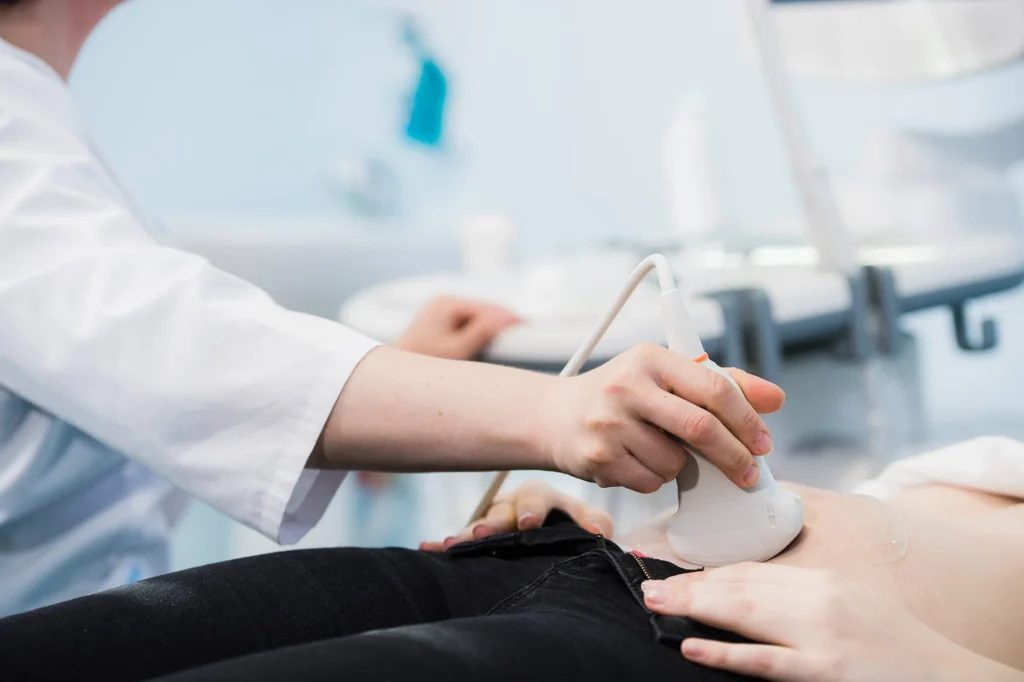
Depending on your symptoms and goals, we can use ultrasound either on the stomach or on the perineum. This helps us better understand how your bladder and pelvic floor are functioning and allows us to tailor your treatment and exercises specifically to you.

Using real-time ultrasound imaging, we can assess how your pelvic floor muscles move and function when you contract, relax, cough, bear down and perform other movements.
Depending on your symptoms and goals, we can use ultrasound either on the stomach or on the perineum. This helps us better understand how your bladder and pelvic floor are functioning and allows us to tailor your treatment and exercises specifically to you.

Service
What Can Pelvic Ultrasound Help With?
Pelvic ultrasound can be useful if you’re experiencing:
- Pelvic floor dysfunction
- Difficulty activating or relaxing your pelvic floor muscles
- Bladder urgency
- Stress urinary incontinence or bladder leakage
- Difficulty fully emptying your bladder
- Constipation
- Defecatory dyssynergia, where the pelvic floor does not relax properly during a bowel motion
- Pelvic pain
- A feeling of heaviness, pressure or bulging
- Concerns about your pelvic floor during pregnancy
- Recovery after birth
- Uncertainty about whether you’re doing your pelvic floor exercises correctly
- Concerns about returning to exercise or higher-impact activities after birth
It can also be a great tool if you simply want to better understand your pelvic floor and how it works.
Service
Ultrasound on the Stomach
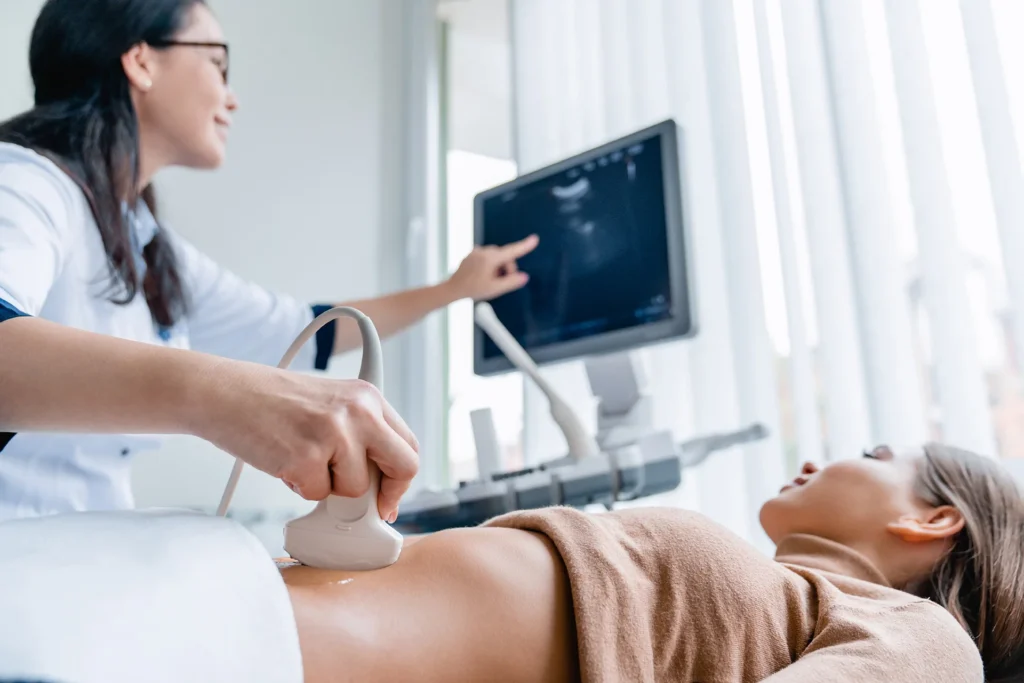
Using ultrasound over the lower stomach allows us to assess the bladder and pelvic floor muscles.
For the bladder, we can assess whether you are fully emptying after passing urine and check for any post-void residual, which is the amount of urine remaining in the bladder.
We can also observe how your pelvic floor muscles activate and move. This can be particularly helpful for people experiencing bladder urgency, stress urinary incontinence or difficulty knowing whether they are activating their pelvic floor correctly.
Seeing your muscles in real time can help improve your understanding, awareness and control.
For the bladder, we can assess whether you are fully emptying after passing urine and check for any post-void residual, which is the amount of urine remaining in the bladder.
We can also observe how your pelvic floor muscles activate and move. This can be particularly helpful for people experiencing bladder urgency, stress urinary incontinence or difficulty knowing whether they are activating their pelvic floor correctly.
Seeing your muscles in real time can help improve your understanding, awareness and control.
Service
Ultrasound on the Perineum
Transperineal ultrasound involves placing the ultrasound probe externally on the perineum. This allows us to assess how your pelvic floor moves and, importantly, how well it relaxes and lengthens.
This can be particularly helpful for:
- Pelvic pain
- Difficulty relaxing the pelvic floor
- Constipation
- Defecatory dyssynergia
- Birth preparation
The real-time visual feedback can help you better understand how to relax, lengthen and coordinate your pelvic floor muscles.
Service
Preparing for Birth
If you’re preparing for a vaginal birth, transperineal ultrasound can be a useful tool for birth preparation.
We can use real-time imaging while practising relaxation and pushing, allowing you to see how the pelvic floor opens, drops and lets go. This visual feedback can help you better understand your body and feel more confident preparing for birth.
Service
What services support your MOT's
Meet the team behind your care
Tracey Matthews
Tracey is a specialist Women’s Health Physiotherapist and treats a range of women’s health conditions including urinary incontinence, pelvic floor dysfunction, lower back pain, pelvic pain and more.
Nicola Nimon
Hi I’m Nicola, I’m a Pelvic Health Physiotherapist dedicated to helping women feel confident, informed and supported through every stage of life.
See Your Pelvic Floor. Understand Your Body. Feel More Confident.
Pelvic ultrasound gives you and your physiotherapist a real-time view of what your pelvic floor is doing, helping us create a treatment plan based on your body, your symptoms and your goals.
Whether we use ultrasound on your stomach to assess your bladder and pelvic floor activation, or on the perineum to assess relaxation and movement, the aim is to give you a clearer understanding of your body and take the guesswork out of your pelvic floor. Book your wo