




Service
Support for pelvic organ prolapse and bladder leakage
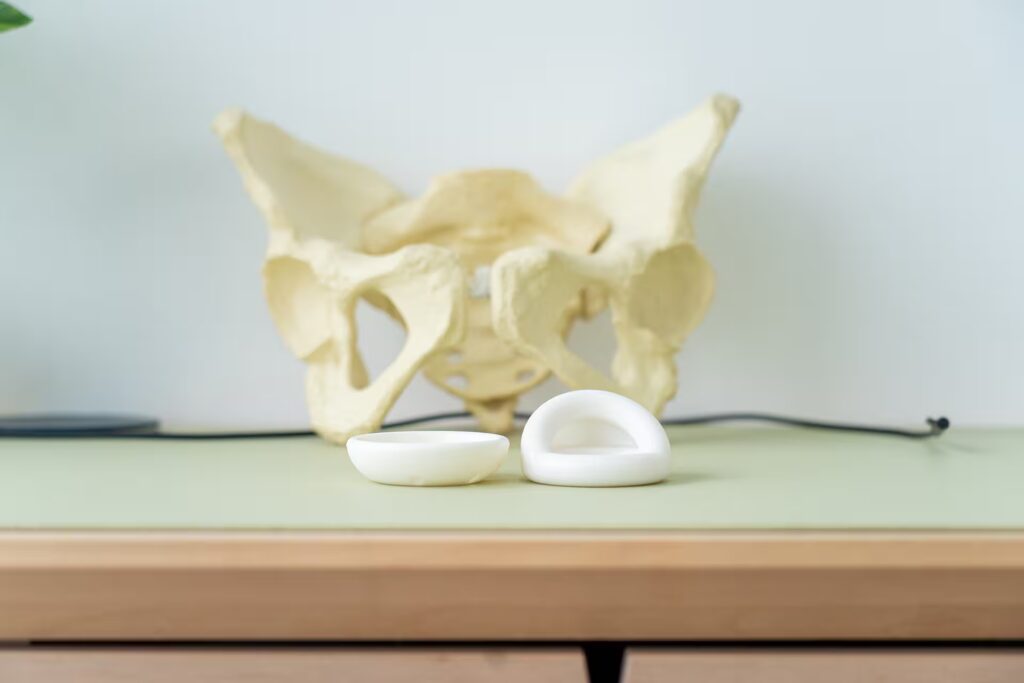
Vaginal pessaries are soft, medical-grade silicone devices used to support pelvic organ prolapse and manage urinary incontinence. Some women choose to wear a pessary daily, while others use one only during exercise or higher-impact activities for additional support.
Often described as a “sports bra for the pelvic organs,” a pessary sits comfortably inside the vagina to help lift and support the vaginal walls and/or uterus, reducing symptoms such as heaviness, dragging, or leakage.
Pessaries are available in a wide range of shapes and sizes to suit different anatomy and prolapse types. Many women experience immediate symptom relief, although pessary use is not appropriate for everyone and requires specialist assessment.
What to expect at your pessary fitting
A pessary fitting appointment lasts up to 90 minutes. In some cases, a full pelvic health assessment will already have been completed either by one of our clinicians or a referring healthcare professional.
We also accept pessary referrals from external medical or allied health professionals. These are reviewed on an individual basis and may involve a brief exploratory phone call prior to booking.


What the assessment includes
- A discussion of your current symptoms and how they are affecting daily life
- Review of your medical history (a full history may already have been taken during a previous pelvic health consultation)
- Education around the benefits, indications, and limitations of pessary use
- Pelvic floor retraining, with emphasis on coordinated relaxation as well as strength development
- Rebuilding strength, control, and function of the abdominal wall
- Real-time pelvic floor ultrasound and perineal assessment to evaluate muscle function and provide visual biofeedback
- Pessary assessment and fitting to support pelvic organ prolapse and reduce associated symptoms
If the pessary is comfortable and effective, you’ll be taught how to remove, clean, and reinsert it safely if you choose to self-manage.
Some women prefer clinician-led management. In this case, regular review appointments are required, typically every 3–6 months. Where possible, we can also liaise with local NHS services regarding long-term pessary care.
If the pessary is suitable and in stock, you may take it home on the day. Otherwise, it can be ordered and usually arrives within 1–2 working days.
During the first year, follow-up appointments are typically recommended at:
- 2 weeks
- 3 months
- 6 months
- 12 months
Preparing for your appointment
Fees and booking information
- Pessary fitting appointment: £250
- Pessary device: £55–£75, depending on type
- Pessary fittings are not covered by private health insurance
- A £100 non-refundable deposit is required at the time of booking. Appointments may be rescheduled with at least five working days’ notice. Deposits are not refundable in the event of cancellation.
Referrals and eligibility
If you have recently been assessed by a women’s health specialist and advised to try a pessary, you may be eligible to book directly into a fitting appointment.
All patients are asked to complete an online pre-appointment form. This allows us to determine whether a pessary fitting can be completed at your first visit or whether an initial assessment is required.
If you are travelling from a distance or have not been referred, a short exploratory phone call can be arranged to confirm the most appropriate booking pathway.
Important notes
- Pessary fittings are not performed during menstruation
- Postnatal pessaries may be considered from six weeks postpartum, subject to clinical assessment

Service
What services support your MOT's
Meet the team behind your care
We understand that having women’s health issues can be impactful and you can feel lost as to what to do or whether you can get better. Our specialists have years of experience at making sure you will get better with a perfect blend of knowledge, encouragement, and support in a safe and private environment.

Tracey Matthews
Tracey is a specialist Women’s Health Physiotherapist and treats a range of women’s health conditions including urinary incontinence, pelvic floor dysfunction, lower back pain, pelvic pain and more.

Lize Nel
Lize Nel has more than 15 years of experience, having qualified as a physiotherapist in 2006 in South Africa. She has worked in both the UK and South Africa in private practice, government health systems and with sport teams providing her with a wide breadth of exposure to different people and injuries.